APD has published evidence-based research that targets public policy issues. Below are the researches on peace-building initiatives conducted by APD throughout the years.
No
Cover Page
Title
Year
Author
Abstract
Link
25
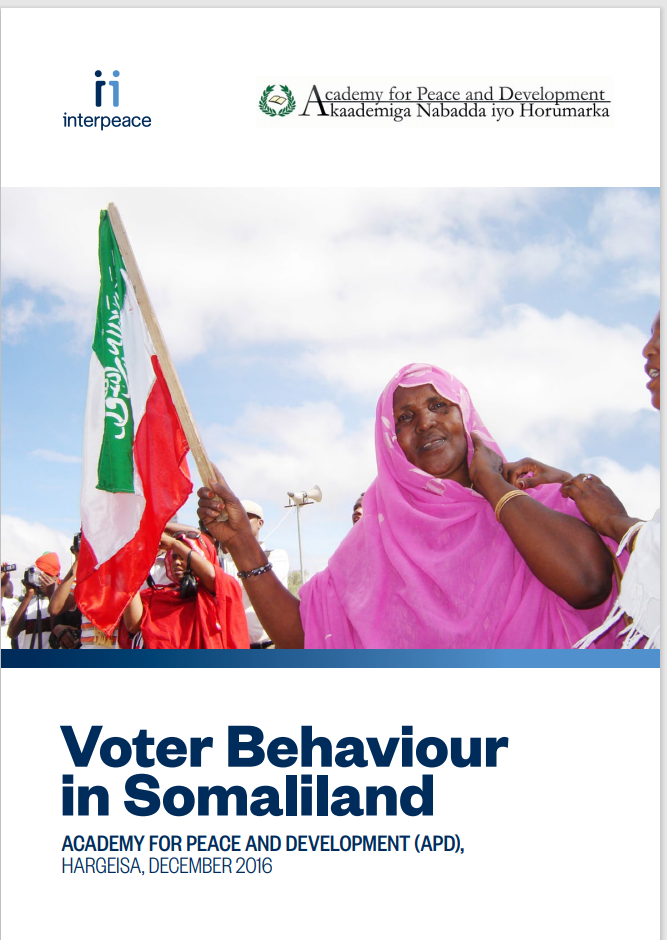
Voter Behavior in Somaliland
2010
Academy for Peace and Development
Voter Behavior in Somaliland Abstract
On 26 June 2010, the people of Somaliland went to the polls to elect a new president for the second time since declaring independence. The incumbent President Daahir Rayaale Kaahin lost to the main opposition candidate Axmed Maxamed Maxamuud Siilaanyo in an election considered credible by local and international observers, which was followed by a peaceful transfer of power to an extent rarely seen in African politics.
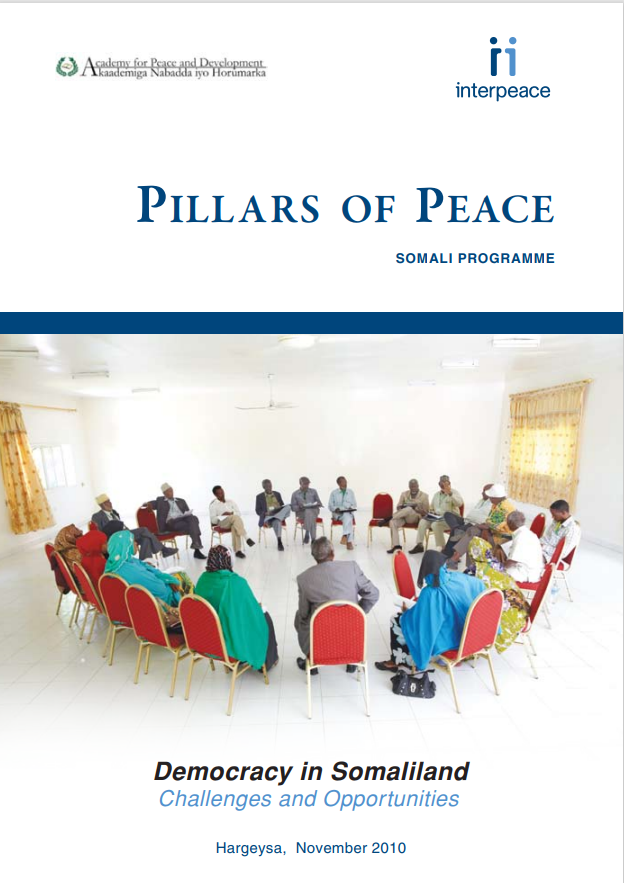
Today the Somali region is mostly commonly sensationalised as the ultimate ‘failed state’. This description obscures the richness of the peace dynamics within and between Somali communities throughout the region. Contrary to the negative generalisation of the Somali present scene, Somaliled initiatives have set up viable political and administrative arrangements to manage conflict and provide durable security and rule of law in both Somaliland and Puntland. In many places Somali entrepreneurship from inside or outside the Somali region has also revitalised the economy.
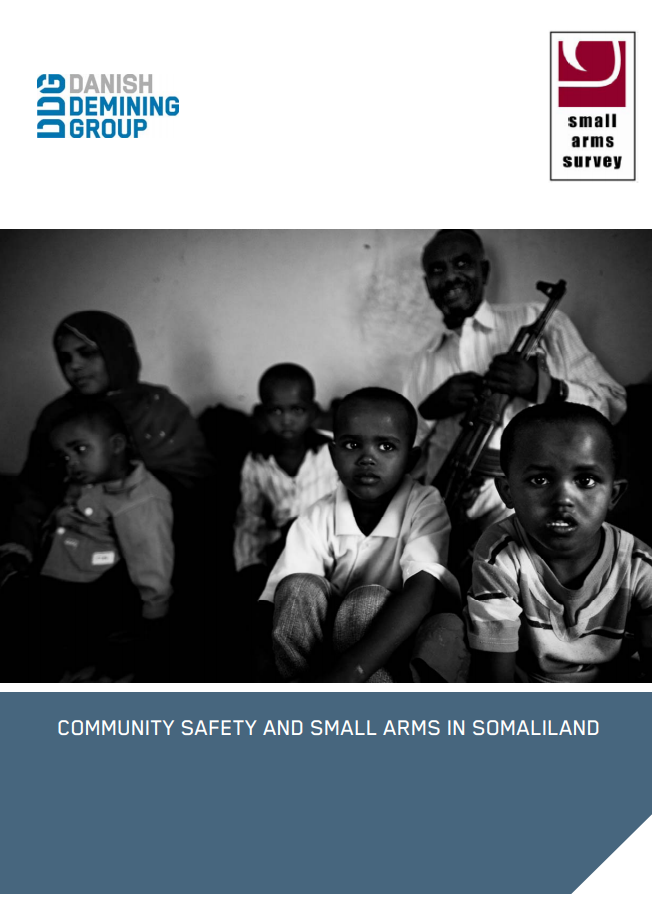
Community Safety and Small Arms in Somaliland Abstract
Between August 2008 and August 2009, data was collected and analyzed across Somaliland in order to improve understanding of community safety and small arms and light weapons in Somaliland.
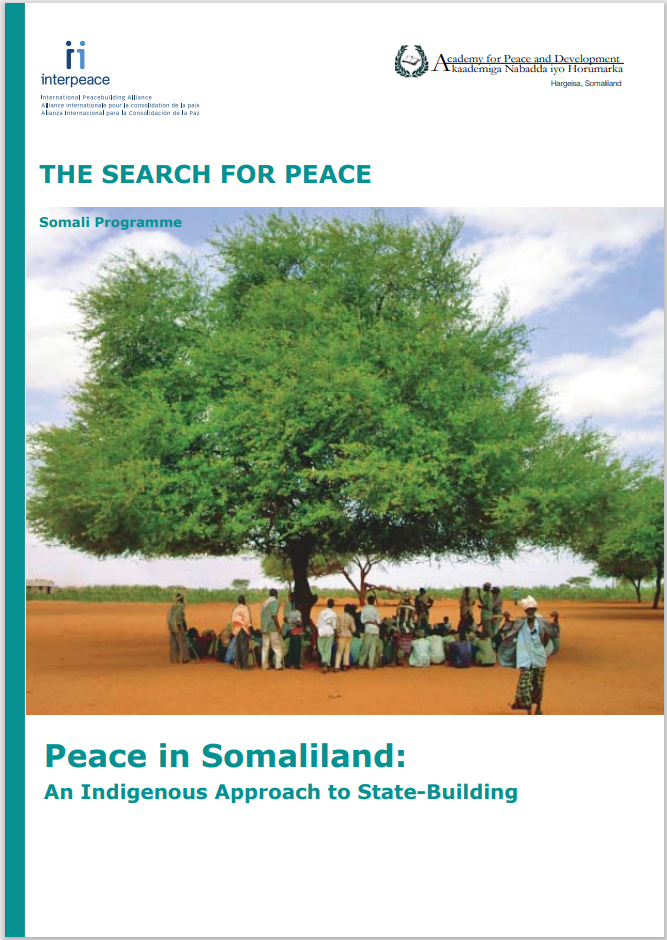
Rebuilding a country after conflict is about far more than repairing damaged buildings and re-establishing public institutions. Fundamentally, it is about restoring the people’s trust and confidence in governance systems and the rule of law, rebuilding relationships at all levels, and providing the population with greater hope for the future. These processes are all critical to the consolidation of peace and security in fragile post-conflict situations. When they are neglected, the threat of conflict re-emerging is very real.
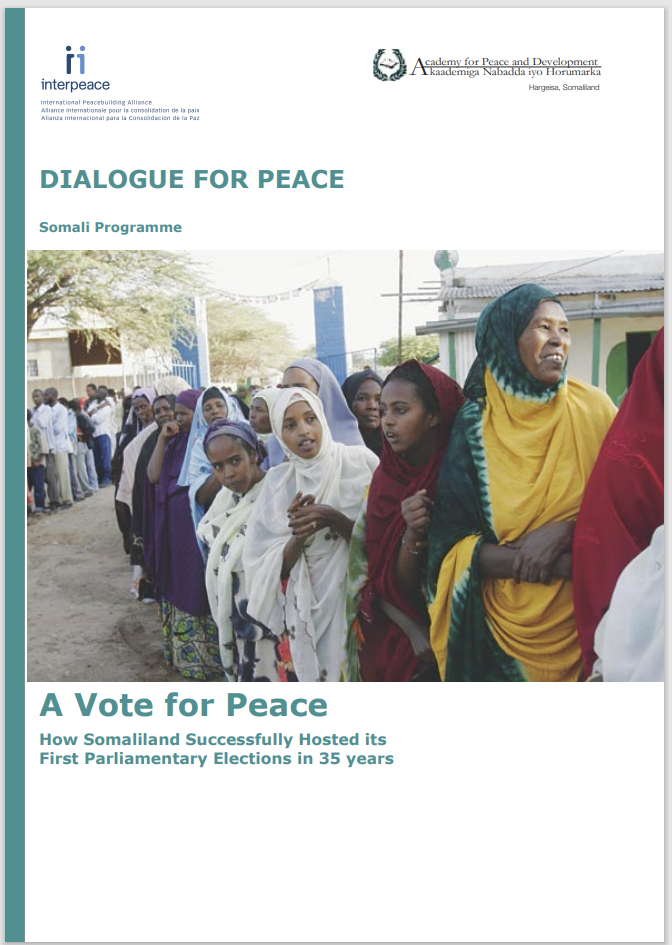
On September 29th 2005, the people of Somaliland went to the polls to choose a new parliament for the first time since 1969. The elections for the 82-seat House of Representatives symbolised not only the final stage in Somaliland’s laborious transition from clan-based power-sharing to multiparty politics, but – in a very real sense – the arrival of a competitive, democratic electoral culture in the country. As well as the hopes and aspirations of up to 3.5 million Somalilanders, the elections clearly held major implications for the long-term prospects for democratisation across the Horn of Africa.