APD has published evidence-based research that targets public policy issues. Below are the researches on peace-building initiatives conducted by APD throughout the years.
The Geopolitics of the Horn of Africa and its Impact on Somaliland
2022
Academy for Peace and Development
The Geopolitics of the Horn of Africa and its Impact on Somaliland Abstract
Ethiopia is at war with the Tigray People's Liberation Front (TPLF) which was been the country's de facto ruling party from 1990s to 2018. This is because TPLF was the most dominant and powerful formation within the ruling coalition, the Ethiopian People’s Revolutionary Democratic Front (EPRDF).
This study produces nuanced insights for understanding the barriers and opportunities to women’s participation in political leadership and representation in Somaliland. The study focuses on the complex and interwoven individual, social, economic, and political issues affecting women's quest for political leadership and representation. We also correct certain misconceptions about women’s political participation.
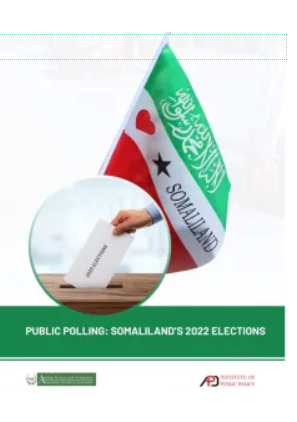
PUBLIC POLLING: SOMALILAND’S 2022 ELECTIONS Abstract
Somaliland has made commendable achievements in upholding democratic processes, especially elections. Since the unilateral dissolution of the 1960 union between Somaliland and Somalia, in 1991, Somaliland has held three presidential elections, two parliamentary elections, two local council elections, and two political party elections (APD, 2016; 2021). However, these elections experienced challenges such as an extension of terms and unprocedural delays (APD, 2014). The upcoming presidential elections and the registration of political parties are already facing similar challenges.
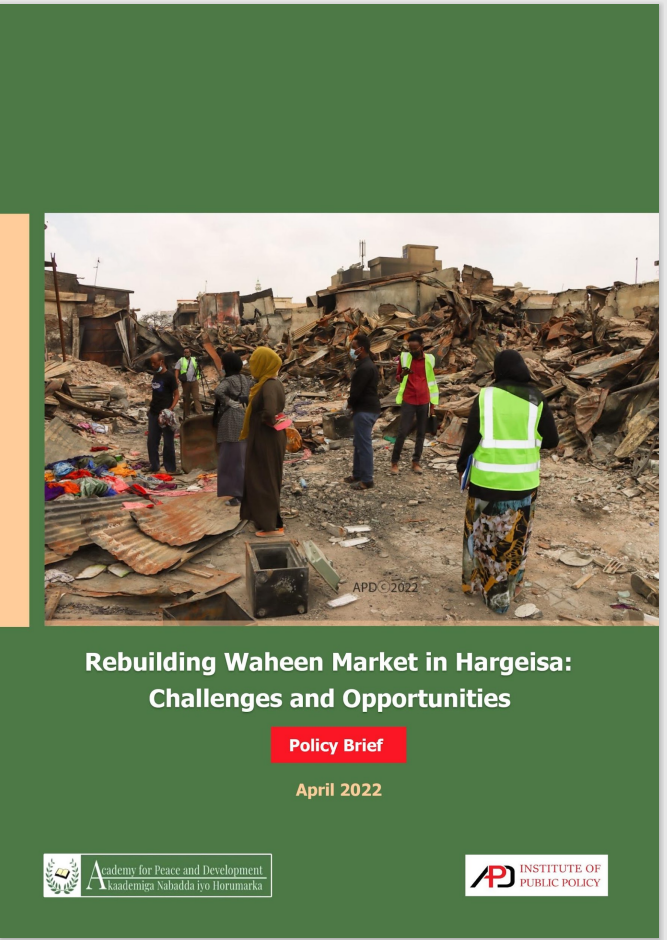
Rebuilding Waheen Market in Hargeisa: Challenges and Opportunities
2022
Academy for Peace and Development
Rebuilding Waheen Market in Hargeisa: Challenges and Opportunities Abstract
The aftermath of Somaliland’s reassertion of independence in 1991, saw an increase in urbanization, especially in
Hargeisa as well as the rapid expansion of markets. Despite the increase in the number and sizes of markets, Waaheen remained a vital market not only for Hargeisa residents and traders, but also for people from throughout the Somali region, including Djibouti, Somalia, and the Somali region of Ethiopia.
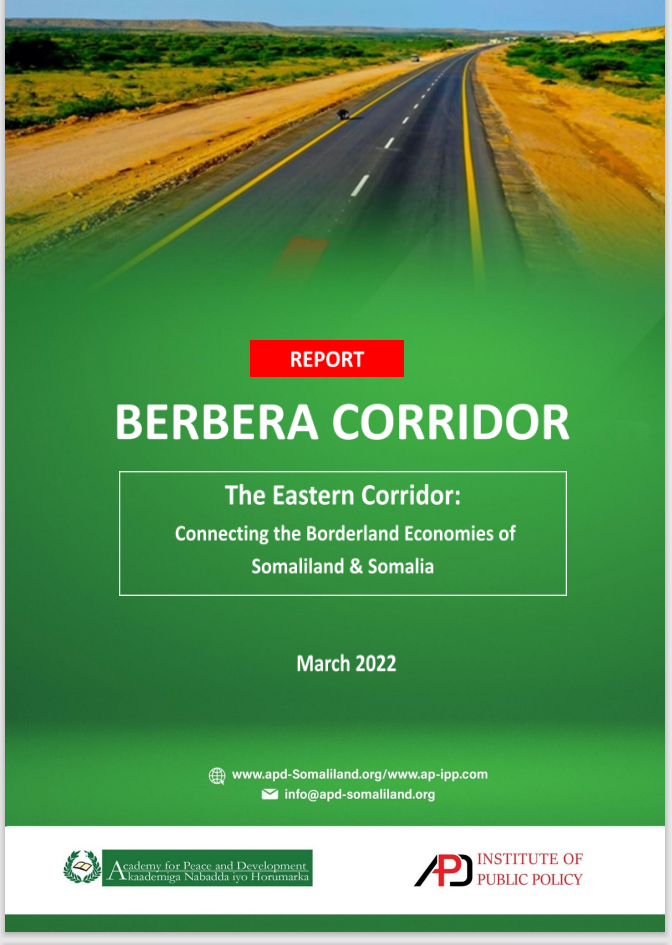
Somaliland's government inked a 30-year concession agreement with Dubai-based port operator DP World in 2016. The port and the Berbera corridor are being modernized as part of this project. It is Somaliland's largest foreign direct investment initiative since 1991. Initially, the literature on the corridor was driven by four objectives: a) Ethiopia's alternative sea access, b) Djibouti's corridor congestion, c) Djibouti's unilateral termination of the concession agreement with DP World, and d) Somaliland's vision for sustainable economic growth and development.
In 2020/2021, Somalia's Federal elections were supposed to take place in Muqdisho ending four years of Farmaajo's leadership, however, at the time of writing this report, the federal selection-based elections have been delayed due to political disagreements among the key political players.
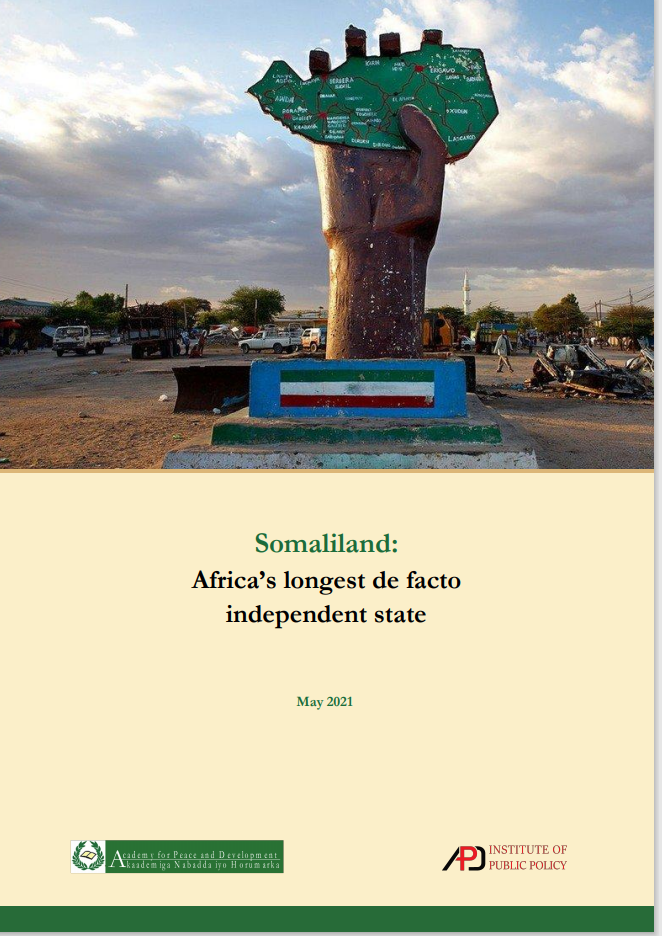
Somaliland: Africa’s longest de facto independent state
2021
Academy for Peace and Development
Somaliland: Africa’s longest de facto independent state Abstract
This discussion paper is intended to capture Somaliland’s journey to end violence, reach a durable political settlement through an elite-negotiated process, form a new legitimate and democratic government, and facilitate a free market economy. The paper presents Somaliland's unique approach to peace and state-building- locally-driven, culturally-rooted, reconciliation-focused, and traditionally-engineered processes whereby all key stakeholders were engaged to reach a new political settlement agreed by dominant players. In this regard, the paper argues that the state formation of Somaliland was built on existing traditional informal institutions thus creating a neopatrimonialism political culture. The paper further explains that Somaliland’s success factors
for its peace and state-building process are now its major constraints to inclusive economic growth and development. Clientelism and patronage have dominated the political culture forming a small elite circle whose interests threaten the very basic principles of free-market economy.