APD has published evidence-based research that targets public policy issues. Below are the researches on peace-building initiatives conducted by APD throughout the years.
No
Cover Page
Title
Year
Author
Abstract
Link
17
Hybrid Security Governance in Somaliland
2021
Academy for Peace and Development
Hybrid Security Governance in Somaliland Abstract
Somaliland communities have traditional system of governance, in which customary law and the clan system from which it derived provided the model for conflict resolution and a hybrid political order in general. This system of governance has gained prominence and space after the collapse of the formal institutions of then Somali Republic. After Somaliland proclaimed its independence from the rest of Somalia in 18 May, 1991; it was envisaged that the empowerment of the traditional governance systems as the only immediate way out of the multiple threats to public safety. Empowering traditional governance processes, elders in the of the clans of the Northern regions(former Somaliland British Protectorate) started their peace-building process, in which a reconciliation process in Somaliland assumed the form of a consensus-based structure, strategy, process, and leadership that allowed communities to settle their differences through inclusive clan meetings. That arrangement later morphed into rebuilding formal security institutions and creation of the basic infrastructure of hybrid security governance system as a part of a state and nation-building initiative. The research reveals how locally-owned peace-building processes preceded state-building initiatives that yielded a unique type of hybrid security sector governance. It also sheds a light on how the formal and non-formal security institutions interact and interface and how they function and cooperate in both urban and the rural context. It also provides an original analysis on the comparisons with Puntland,a region adjacent to Somaliland.
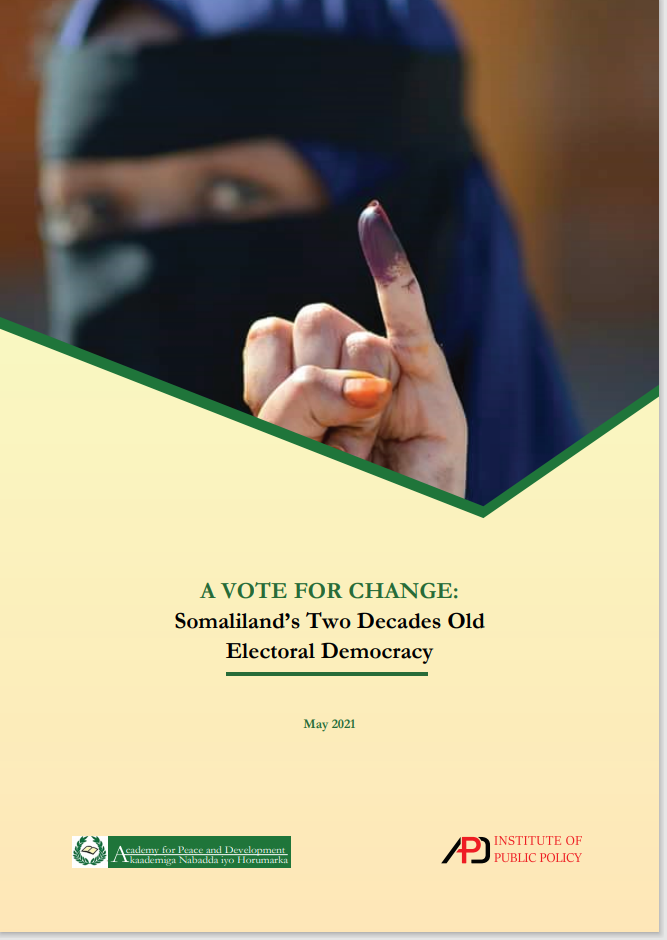
A VOTE FOR CHANGE: Somaliland’s Two Decades Old Electoral Democracy
2021
Academy for Peace and Development
A VOTE FOR CHANGE: Somaliland’s Two Decades Old Electoral Democracy Abstract
Somaliland’s electoral history is rather unique in a troubled part of the world where democratic norms and values are not respected. The combined elections at the end of May 2021 are crucial
for the country’s political stability and democratic credentials
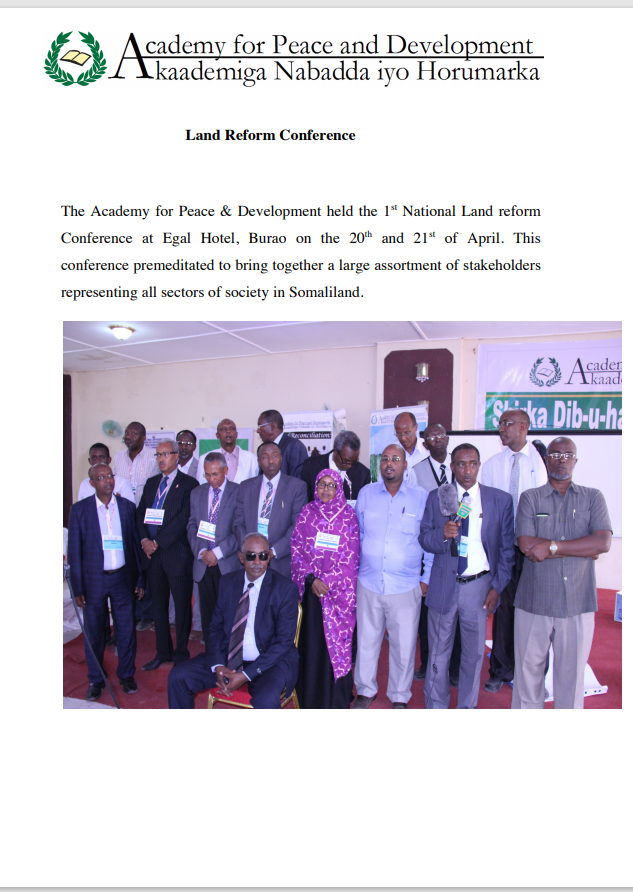
The Academy for Peace & Development held the 1st National Land reform Conference at Egal Hotel, Burao on the 20th and 21st of April. This conference premeditated to bring together a large assortment of stakeholders representing all sectors of society in Somaliland.
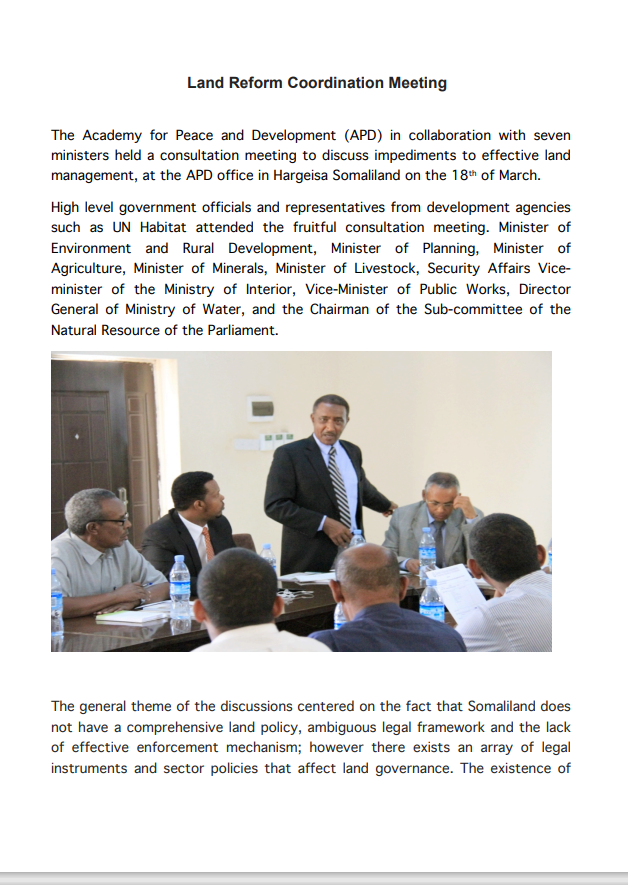
The Academy for Peace and Development (APD) in collaboration with seven ministers held a consultation meeting to discuss impediments to effective land management, at the APD office in Hargeisa Somaliland on the 18th of March.
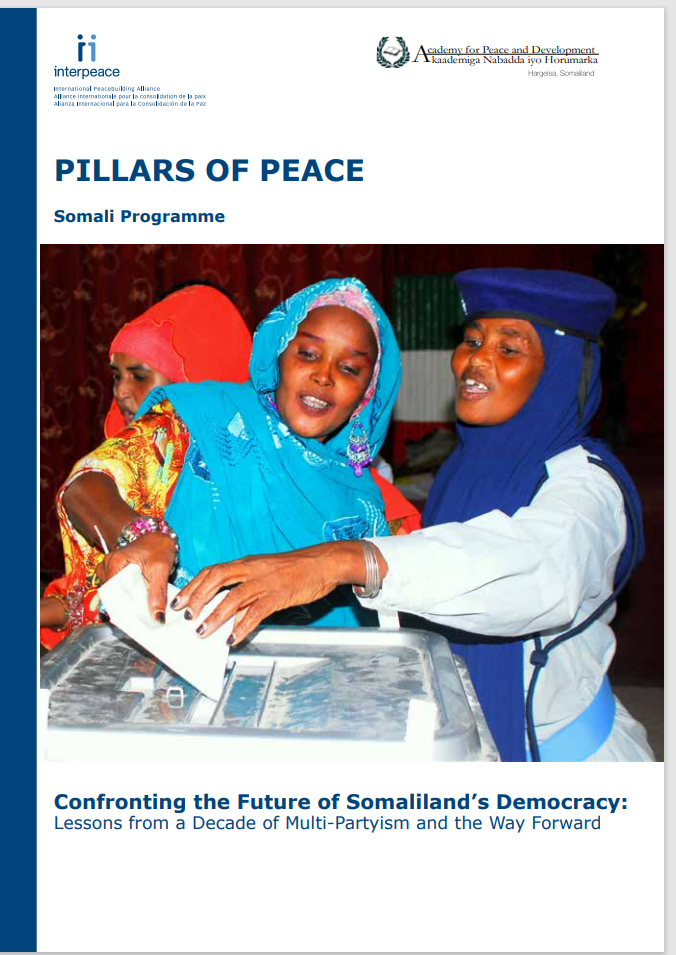
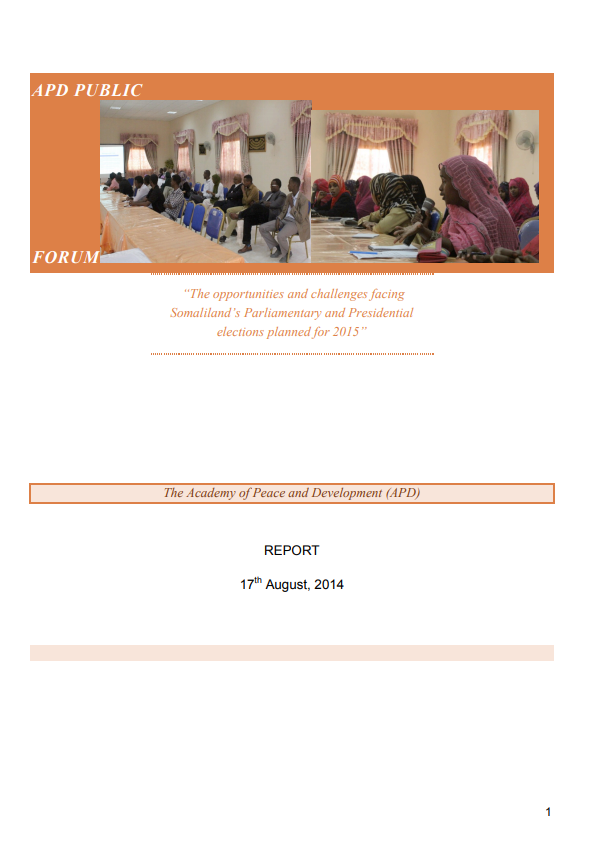
The purpose of the forum was to provide a public dialogue space for discourse on the opportunities and challenges that may affect Somaliland’s Parliamentary and Presidential elections planned to be held in 2015. The goal was to generate an informed discussion before the 2015 elections, analyze and give recommendations on the arising issues. The participants included members of the National political parties, university students, lawyers, women, youth organizations, civil society members, and other members of the public.
Somaliland’s electoral history is rather unique in a troubled part of the world where democratic norms and values are not respected. The combined elections at the end of May 2021 are crucial for the country’s political stability and democratic credentials
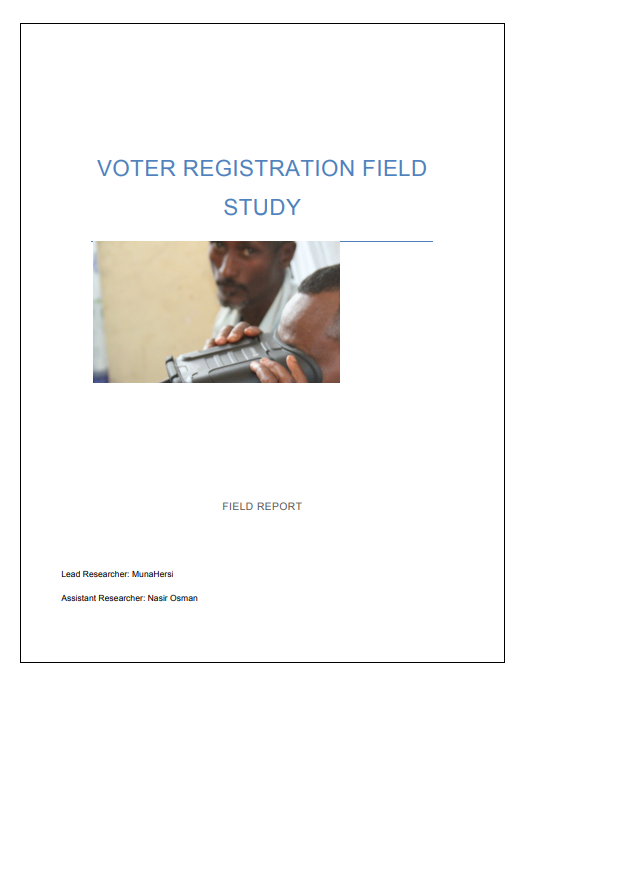
A report on voter registration options by Creative Associates recommended that one way to ensure the reliability of the new voter registration system is by conducting a field study of the adopted technologies before the commencement of the voter registry to provide guidance to the stakeholders and the organizations entrusted with the voter registration so that potential challenges are known and strategies introduced to build a reliable and sustainable biometric voter register